> For the complete documentation index, see [llms.txt](https://helpdocs.quickadminpanel.com/llms.txt). Markdown versions of documentation pages are available by appending `.md` to page URLs; this page is available as [Markdown](https://helpdocs.quickadminpanel.com/create-panel/file-photo-upload-fields.md).
# File/Photo Upload Fields
In CRUDs Editor, we have two field types for files - called **File** and **Photo**. The difference is pretty small - **Photo** field has additional validation parameters for image size.
For uploading files, we're using a very popular package called [Laravel Medialibrary](https://github.com/spatie/laravel-medialibrary), you can view its [official documentation here](https://docs.spatie.be/laravel-medialibrary/v7/introduction).
On the front-end, we're using [Dropzone Javascript library](https://www.dropzonejs.com/), here's how it looks together:
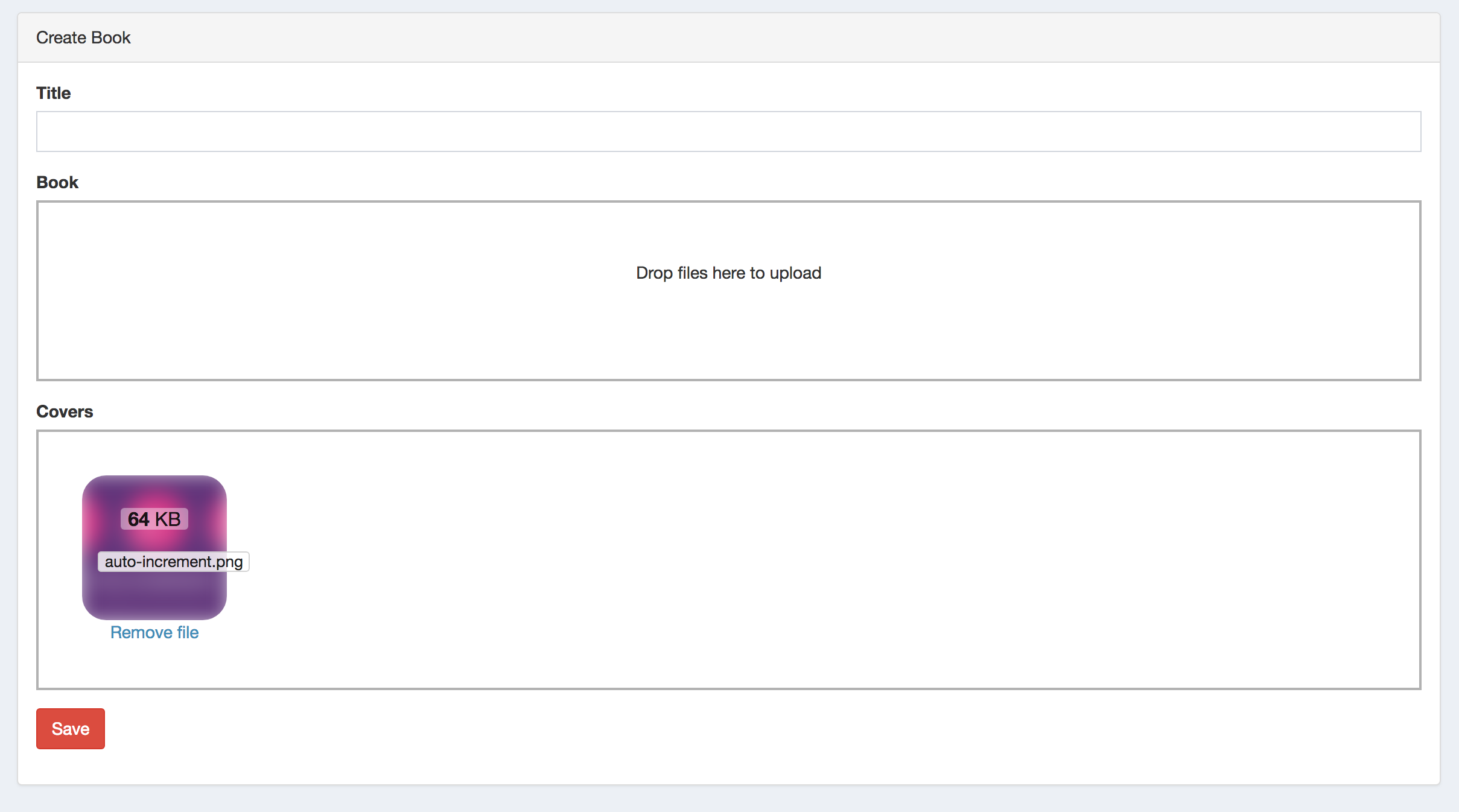
You can read our in-depth tutorial: [Multiple File Upload with Dropzone.js and Laravel MediaLibrary Package](https://laraveldaily.com/multiple-file-upload-with-dropzone-js-and-laravel-medialibrary-package/)
As per Laravel Medialibrary functionality, the files are stored by default in **storage/app/public** folder, dividing every file in its own subfolder with ID number:
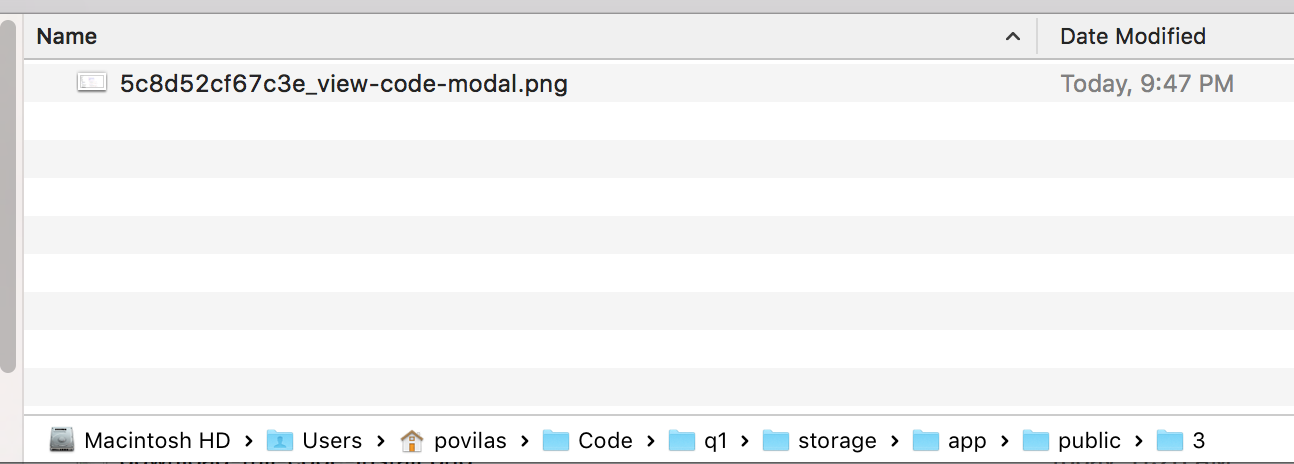
By default, **storage/** internal folders are not available in the browser for public visitors, to change that - you need to run one important Artisan command:
```
php artisan storage:link
```
See more info in the official Laravel documentation: [The Public Disk](https://laravel.com/docs/master/filesystem#the-public-disk)
If you want to change the **location** of where files are stored, change your parameters in **config/filesystems.php** file:
```
'disks' => [
'local' => [
'driver' => 'local',
'root' => storage_path('app'),
],
'public' => [
'driver' => 'local',
'root' => storage_path('app/public'),
'url' => env('APP_URL').'/storage',
'visibility' => 'public',
],
's3' => [
'driver' => 's3',
'key' => env('AWS_ACCESS_KEY_ID'),
'secret' => env('AWS_SECRET_ACCESS_KEY'),
'region' => env('AWS_DEFAULT_REGION'),
'bucket' => env('AWS_BUCKET'),
'url' => env('AWS_URL'),
],
],
```
In the database, filenames for all CRUDs are stores in one DB table **media** - this is how Laravel Medialibrary works.

This table uses [Polymorphic Relations](https://www.youtube.com/watch?v=rx1DQBE01b0) to tie the media record to the CRUD Model it belongs to - see columns **model\_type** and **model\_id**.
## Troubleshooting
We can't ensure that all file uploads settings will be correct **on your web-server**. So if something doesn't work on your web-server after download, check out this guide on our blog: [Top 5 Questions/Answers About Spatie MediaLibrary](https://quickadminpanel.com/blog/top-5-questionsanswers-about-spatie-medialibrary/) - it answers these questions:
* Where are my files stored?
* Why are my files not shown? 404 error?
* How to generate/customize thumbnails?
* How to query Media relationships in Eloquent?
* Why artisan migrate doesn’t work with MediaLibrary?
Another article related to potential file/photo problem:
{% embed url="" %}
## Extra Customizations
If you want to save disk space, here's an article for you:
{% embed url="" %}
If you want to change the **maximum file size** to upload, there will be a few places for that setting.
In **create.blade.php** and **edit.blade.php** of your CRUD, at the bottom there's a Dropzone setting **maxFilesize**, which by default is 2 MB:
```
@section('scripts')